
Though the refrigerator seems to be a simple appliance externally, there are multiple electrical and refrigeration components that help in keeping the food and drinks chilled. Whenever there is a problem in the refrigerator, it doesn’t necessarily mean that the problem you see on the surface is the real problem. There could be several problems such as no cooling despite continuous operation, non-starting, abnormal noise production, frosting, or even electrical problems.
That’s why Fridge Repair Training in Patna can prove to be beneficial for the students who wish to learn about servicing and troubleshooting the refrigerator. In lieu of just learning about different parts of the appliance, the practical training helps the learner understand how a technician analyzes a refrigerator.
When a Refrigerator Stops Cooling, Where Does a Technician Start?
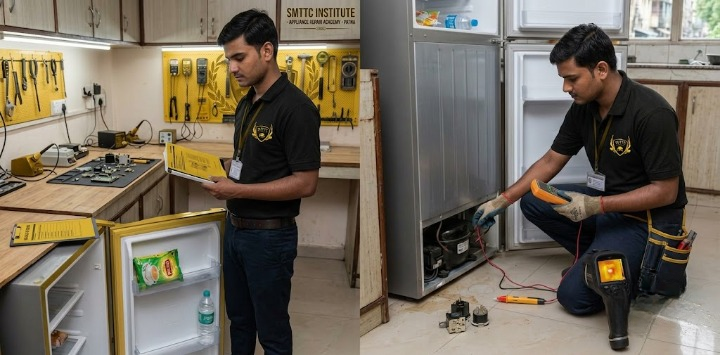
Imagine a customer says, “The fridge is running, but it is not cooling properly.” There can be several possible reasons behind the same complaint.
A technician does not necessarily begin by replacing a component. The first step is usually to understand the complaint and inspect the refrigerator. The technician may check whether the compressor is operating, observe the condition of the condenser, examine the thermostat or control system, and look for signs of electrical or refrigeration-related problems.
This type of systematic approach is an important part of refrigerator repair training in Patna because troubleshooting is not simply about changing damaged parts. It involves finding the connection between the symptom and the actual fault.
One Complaint Can Have Several Different Causes
The issue of poor performance in the fridge may arise from various causes including electrical problems, faulty components, airflow, compressor, or the refrigeration system itself.
The case of the fridge that does not operate can be diagnosed by checking the power source, wiring, relay, overload, thermostat, and compressor circuitry.
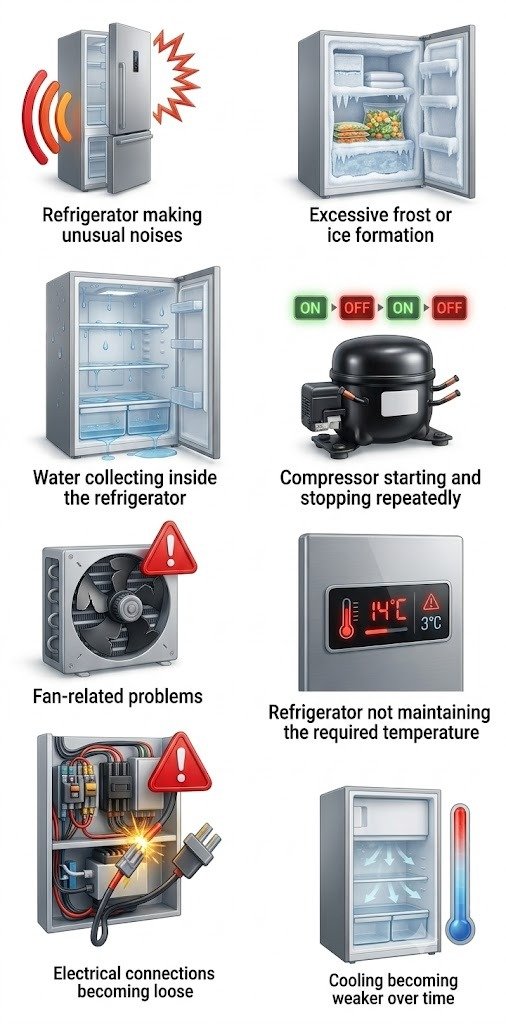 Other common complaints include:
-
Refrigerator making unusual noises
-
Excessive frost or ice formation
-
Water collecting inside the refrigerator
-
Compressor starting and stopping repeatedly
-
Fan-related problems
-
Refrigerator not maintaining the required temperature
-
Electrical connections becoming loose
-
Cooling becoming weaker over time
Learning to distinguish between these situations gives a trainee a more practical understanding of refrigerator servicing.
From Symptom to Fault: How Technicians Approach Troubleshooting
Good troubleshooting follows a sequence rather than random part replacement.
A basic approach can be understood as:
Customer Complaint ➜ Visual Inspection ➜ Testing ➜ Fault Identification ➜ Repair ➜ Final Testing
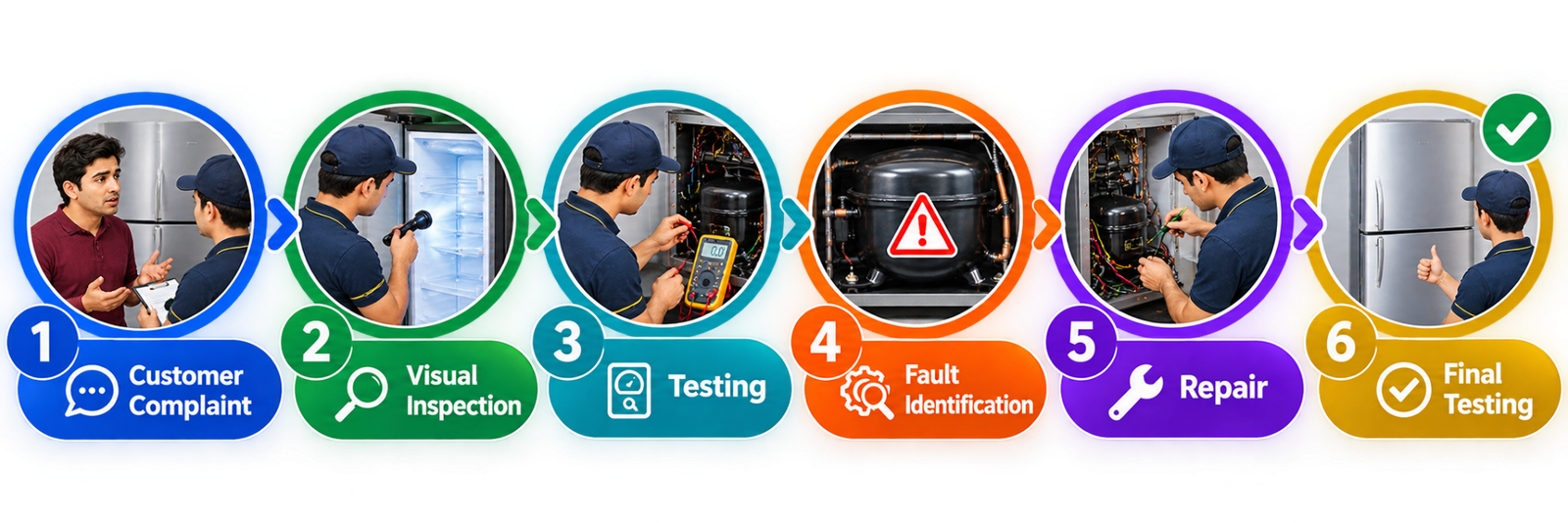
For example, if a refrigerator is not cooling, the technician first gathers information about the problem. The appliance is then inspected and relevant components are tested. Based on the results, the faulty section can be identified before repair work begins.
This method is one reason a fridge repairing course in Patna can be more useful when it includes practical troubleshooting instead of focusing entirely on classroom theory.
The Tools Behind Refrigerator Troubleshooting
Repair work also depends on using the right tools correctly. A technician needs to understand not only the name of a tool but also what information it provides during diagnosis.
A multimeter, for instance, can be used for different electrical checks. Depending on the situation, a technician may test continuity, voltage, resistance, or electrical components.
Other tools are used for refrigeration-related work, component testing, wiring checks, and servicing procedures.
During practical refrigerator repairing training, students can become familiar with the purpose of different tools and learn why measurements should be taken before deciding what needs to be repaired or replaced.
A Look Inside the Refrigerator: Components Technicians Need to Understand
Understanding the refrigerator's major components helps connect symptoms with possible faults.
The refrigeration system includes important parts such as the compressor, condenser, expansion device, and evaporator. Each has a role in the cooling cycle.
The electrical side can include components such as:
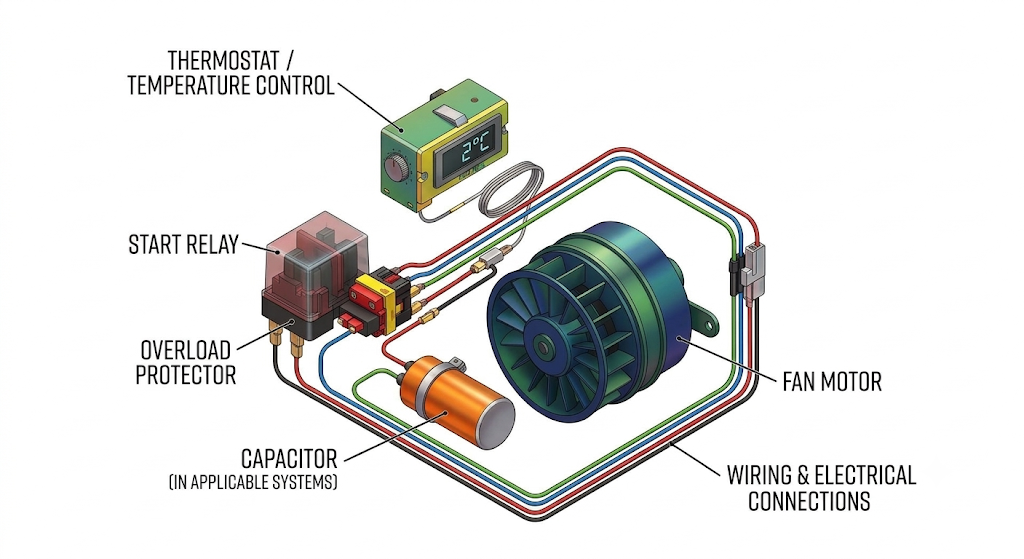
Thermostat or temperature control
- Start relay
-
Overload protector
-
Capacitor in applicable systems
-
Fan motor
-
Wiring and electrical connections
Modern refrigerators can also have sensors, electronic control systems, and other parts depending on the design of the appliance.
For students enrolling in a fridge mechanic training course in Patna, having knowledge about how the parts function together will prove to be more useful than learning the names of the parts.
Why Practical Exposure Changes the Learning Experience
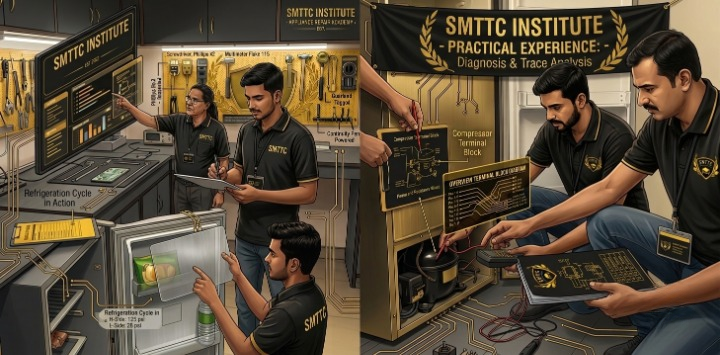
Reading about refrigerator components can provide basic knowledge, but working on an actual appliance creates a different learning experience.
A learner may know what a compressor is from a textbook. However, identifying it inside a refrigerator, understanding its connections, checking related components, and observing its behaviour during troubleshooting requires practical exposure.
The same applies to wiring, electrical testing, component identification, and refrigeration servicing.
This is why students looking for a refrigerator repairing course in Patna can look for training where practical activities form an important part of the learning process.
A Convenient Learning Option for Students Around Danapur and Saguna More
Students from different parts of Patna and nearby areas may look for technical training that is accessible to them. Danapur, Saguna More, and Khagaul are among the areas from which learners may explore local skill-development opportunities.
For someone searching online for a fridge repair course near Danapur or fridge repairing training near Saguna More, the course location can be one consideration. However, learners should also look at the practical content, tools, training environment, and type of repair work covered.
Refrigerator Repair Skills Have Applications Beyond One Type of Customer
Refrigerators are used in homes, shops, restaurants, offices, food-related businesses, and other commercial environments. As a result, refrigerator servicing can involve different types of complaints and working conditions.
A technician may encounter a simple electrical fault in one appliance and a more complicated cooling-related issue in another.
This variety can help learners understand that repair work is not always a fixed set of steps. The same symptom may require different checks depending on the appliance and its condition.
Practical experience therefore becomes important for anyone considering technical work in appliance servicing.
What Should You Look for in Fridge Repair Training?
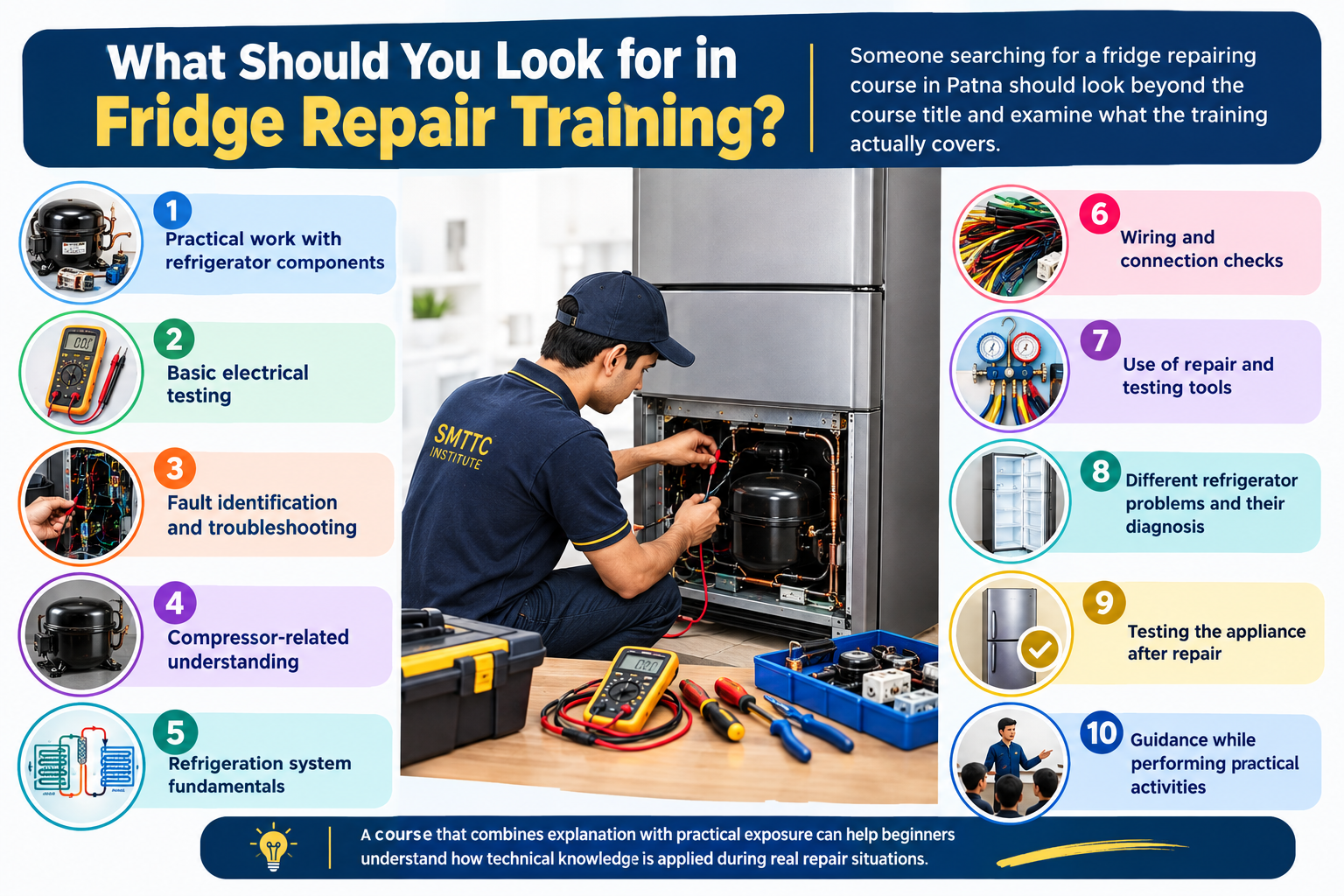
Someone searching for a fridge repairing course in Patna should look beyond the course title and examine what the training actually covers.
Useful areas to consider include:
-
Practical work with refrigerator components
-
Basic electrical testing
-
Fault identification and troubleshooting
-
Compressor-related understanding
-
Refrigeration system fundamentals
-
Wiring and connection checks
-
Use of repair and testing tools
-
Different refrigerator problems and their diagnosis
-
Testing the appliance after repair
-
Guidance while performing practical activities
A course that combines explanation with practical exposure can help beginners understand how technical knowledge is applied during real repair situations.
Why Local Students May Consider Practical Technical Training
For learners living around Phulwari Sharif, Bailey Road, Patliputra, Boring Road, Kankarbagh, Anisabad, and other parts of Patna, choosing a nearby technical training option can make regular practical learning easier to manage.
However, accessibility is only one factor. The quality of hands-on practice, trainer guidance, equipment, and troubleshooting exposure should also be considered when comparing training options.
Where Can Refrigerator Repair Skills Be Used?
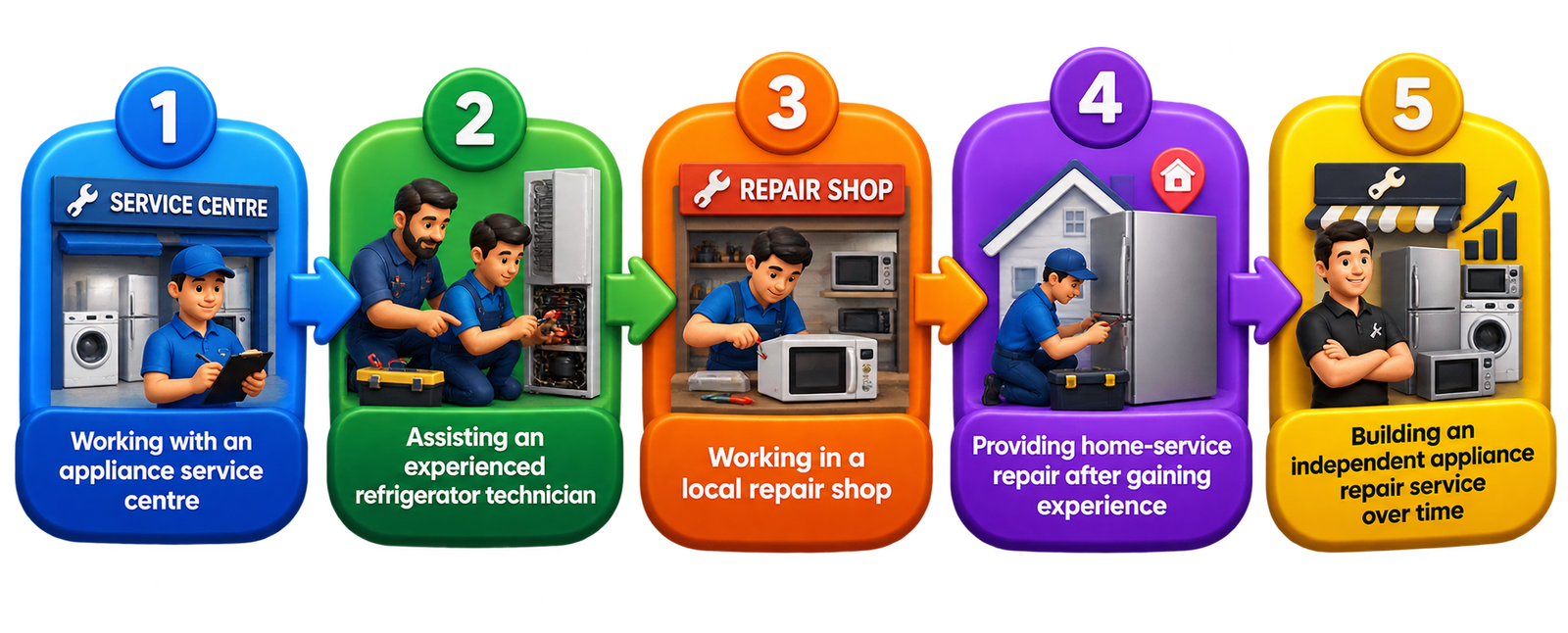
After developing sufficient practical knowledge and experience, refrigerator repair skills can be useful in different work environments.
A learner may explore opportunities such as:
-
Working with an appliance service centre
-
Assisting an experienced refrigerator technician
-
Working in a local repair shop
-
Providing home-service repair after gaining experience
-
Building an independent appliance repair service over time
The actual work opportunities available to an individual can depend on their practical ability, experience, customer handling, and willingness to continue learning.
Learning Refrigerator Repair Is a Process, Not Just a Course Certificate
Succeeding in fixing an appliance involves much more than merely being familiar with the name of each part in the appliance.
The novice must learn to observe, ask appropriate questions, check the appropriate section of the appliance, use the right tools, diagnose the problem, fix the problem, and test the appliance.
That process gradually turns basic technical knowledge into practical ability.
For students considering Fridge Repair Training in Patna, this practical approach can provide a structured way to begin learning refrigerator servicing and troubleshooting.
Start Building Practical Repair Skills with SMTTC
At Smart Technical Training Institute , students interested in refrigerator servicing can explore practical-oriented training covering refrigerator components, tools, troubleshooting, electrical checks, and repair-related skills.
The focus should be on developing an understanding of how refrigerators work, how faults can be investigated and how practical repair skills develop through repeated hands-on learning.
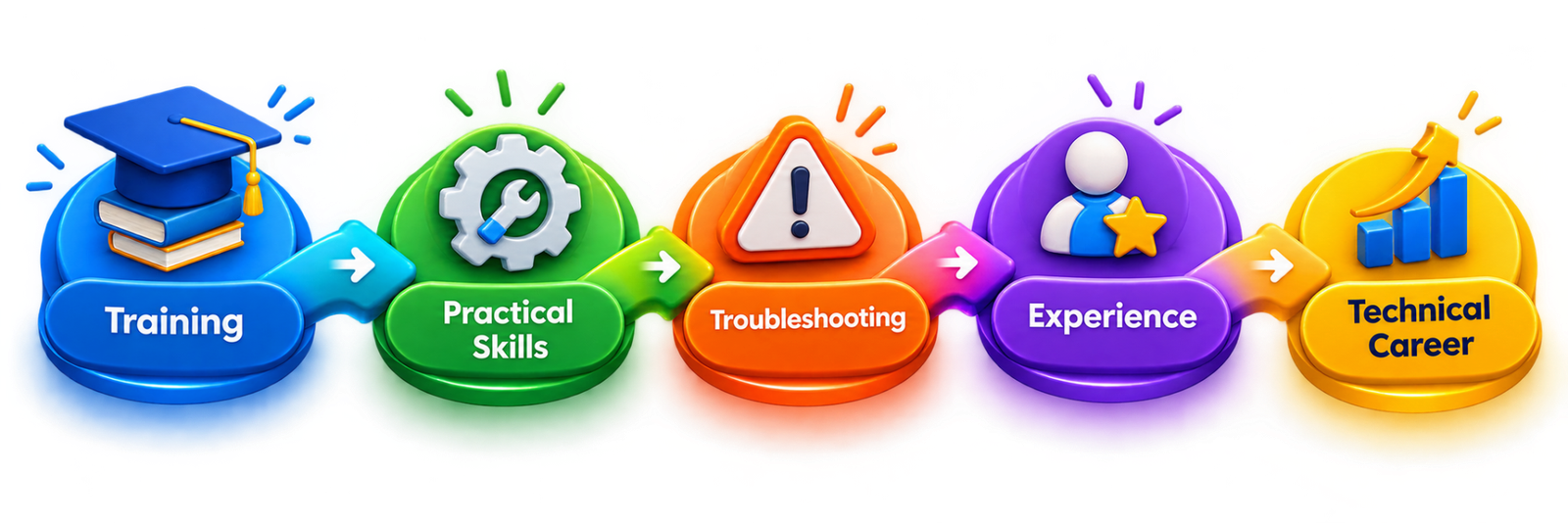
Training ➜ Practical Skills ➜ Troubleshooting ➜ Experience ➜ Technical Career